Confused by labels like freak folk and chamber folk? This guide to indie folk subgenres explores labels such as freak folk, chamber folk, folk-pop and folk baroque. Each one bends acoustic songwriting in a different direction.
This guide sits under our wider look at indie folk music, and it focuses on how the branches differ.
| Item | Value |
|---|---|
| Earliest indie folk origins | 1990s folk artists with alternative rock influences |
| “Freak folk” solidified as a genre | Mid-2000s |
| Pitchfork equated freak folk with New Weird America | 2005 |
| Freak folk participants | Espers, Devendra Banhart, Joanna Newsom and Animal Collective |
These details come from Wikipedia’s indie folk article and its freak folk article. Wikipedia pages are edited often, so check them before you rely on the figures.
Why indie folk splits into subgenres
Indie folk is a loose family, not a single sound. According to Wikipedia, the genre has its earliest origins in 1990s folk artists who displayed alternative rock influences, such as Ani DiFranco and Dan Bern.
Because the starting point was “folk plus something else”, the “something else” became the dividing line. Add psychedelia and you get one branch. Add string arrangements and you get another. Add pop hooks and you get a third.
Treat the labels as handy signposts, not strict rules, and expect to see the same record described in more than one way.
Critics and fans disagree on where one ends and the next begins, and many artists sit in two at once.
Freak folk and psych folk
Freak folk is the strangest branch. It mixes acoustic folk with psychedelic textures, odd voices and a taste for the unfamiliar.
The name has a messy history. Wikipedia notes the term had been in informal use for decades before solidifying into a genre in the mid-2000s, and in 2005 Pitchfork equated it with “New Weird America”.
Wikipedia quotes a description of freak-folk as tending “to eschew any clear genre parameters” and lists Espers, Devendra Banhart, Joanna Newsom and Animal Collective among its participants.
Some musicians disliked the label. Banhart, for one, has said he never adopted the term. For a deeper look at the label itself, see our guide to the freak folk meaning.
Chamber folk and orchestral folk
Where freak folk shakes the frame, chamber folk polishes it. The arrangement is the point, and each instrument is given room to be heard.
Chamber folk trades fuzz and weirdness for arrangement. Think songwriting built around a small group of players, often strings or woodwinds, rather than a drum kit and electric guitars.
The result tends to feel intimate and composed. Quiet dynamics matter more than volume, and a cello line can carry as much feeling as the vocal.
If you want to know which instruments produce that sound, our rundown of indie folk instruments covers them.
Folk baroque and fingerstyle roots
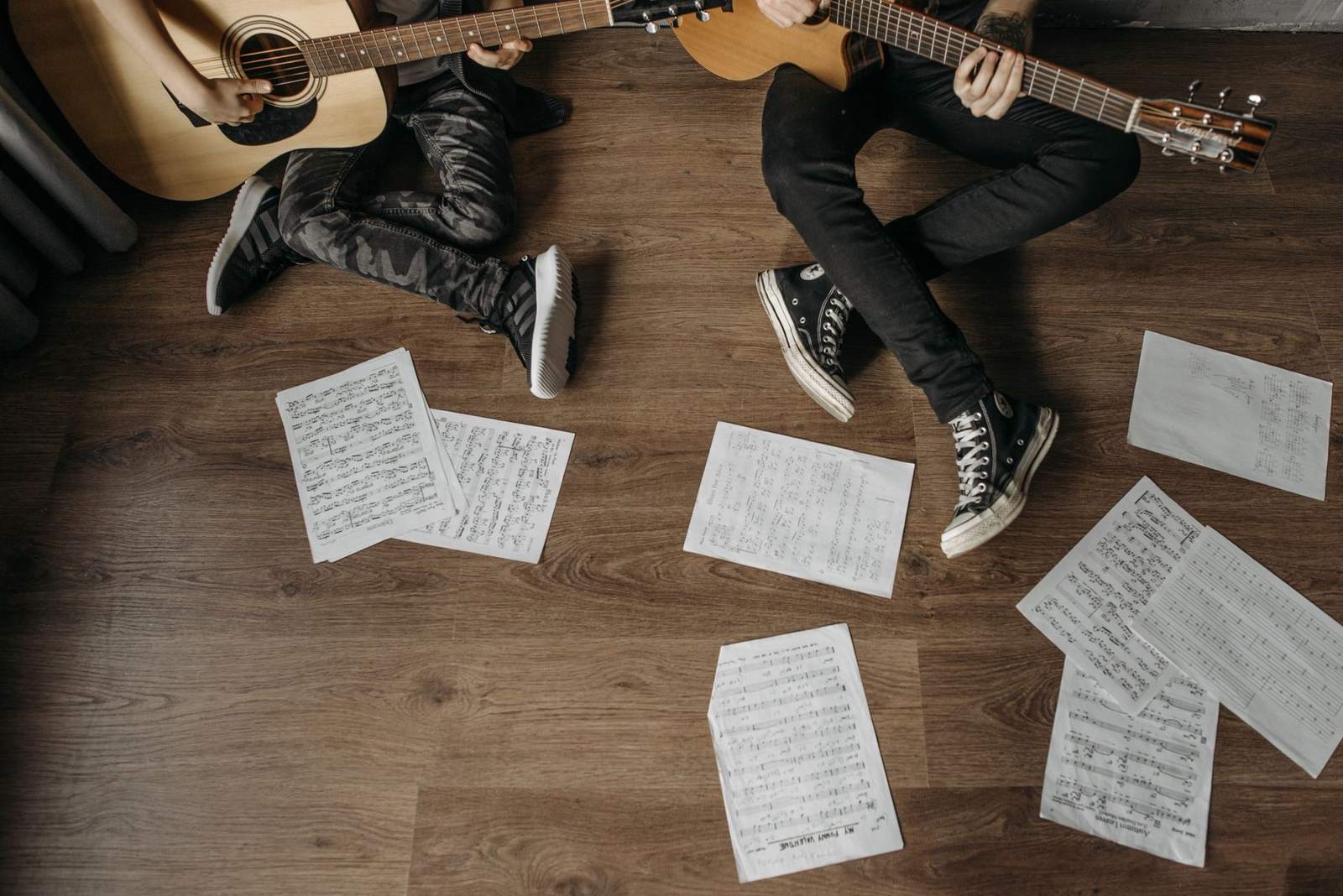
Many indie folk guitarists draw on folk baroque, a style of intricate acoustic guitar playing. Wikipedia says the adoption of DADGAD tuning was particularly notable in it, because the tuning gave a suspended chord that was neither major nor minor.
In the early 1970s, British artists such as Nick Drake, Tim Buckley and John Martyn added new tunings and techniques. Martyn’s Solid Air (1972) set the bar for later British acoustic guitarists, according to the same page.
You can hear that lineage in modern fingerpicked indie folk, even when the songs sound nothing like 1970s records.
Folk baroque is more about technique than mood. A fingerpicked guitar can sit inside a whispery bedroom recording, a lush chamber arrangement or a bright pop song, which is why the label tends to describe a playing style rather than a whole scene.
If you play guitar yourself, this is the easiest branch to study. Try an open tuning, let the strings ring and listen to how the bass notes and melody move independently.
Folk-pop and the mainstream end
Folk-pop shows how far the family can stretch. At one end sit hushed, strange recordings that few people hear; at the other sit warm, polished songs built for a crowd to sing along to.
Neither end is more “real” than the other. Both start from the same idea: a song played on acoustic instruments, with the words up front.
Folk-pop is the most accessible branch. It keeps the acoustic instruments and earnest lyrics but leans on choruses you can sing back after one listen.
This is where many listeners first meet the genre. From there, you can follow the thread outward toward the stranger or quieter branches.
How to tell the subgenres apart
Where the lines blur
Real records rarely fit one box. A song can have a psychedelic haze, a string quartet and a chorus all at once, and each listener will file it differently.
That is why critics argue about labels. Some terms describe a scene, some describe a sound, and some were attached by writers long before the musicians agreed to them.
- Scene labels describe who played together and where, such as New Weird America.
- Sound labels describe what you hear, such as chamber folk or folk-pop.
- Technique labels describe how the music is played, such as folk baroque.
Knowing which kind of label you are looking at saves a lot of confusion. It also explains why one band can appear under three different names on three different websites.
A simple listening method
You do not need theory to hear the differences. Try a short, repeatable routine the next time a new indie folk record comes on.
- Listen to the first minute and name the lead instrument, whether guitar, piano, violin or something unexpected.
- Notice the voice. Is it clean and plain, or strange and stretched?
- Count the layers.
- Check whether a chorus sticks after one play. If it does, folk-pop is likely in the mix.
- Listen to the guitar picking. Rolling, intricate patterns point to folk baroque.
After a few albums, the categories start to feel natural. You will also find that you prefer one branch, which makes the next recommendation easier to choose.
Quick cheat sheet
- Freak folk: psychedelic colour, unusual voices, loose structure.
- Chamber folk: strings or woodwinds, careful arrangement, quiet dynamics.
- Folk baroque: complex fingerstyle guitar and open tunings.
- Folk-pop: big hooks and sing-along choruses.
Listen for what carries the song. If it is texture and strangeness, you are probably in freak folk. If it is the arrangement, think chamber folk. If it is the chorus, it is folk-pop.
Frequently asked questions
Is freak folk the same as psych folk?
Show answer
The evidence cited here does not establish whether the terms mean the same thing.
What is the difference between indie folk and folk-pop?
Show answer
Folk-pop puts catchy melodies first. Indie folk as a whole is broader and often more sparse and personal.
Can one artist belong to several subgenres?
Show answer
Yes. Labels are loose, and a single album can mix chamber arrangements with folk-pop hooks.
Where should a beginner start?
Show answer
Start with folk-pop for easy hooks, then move toward chamber folk or freak folk as your taste for texture grows.