Wondering about indie folk vs folk rock? You’re not alone, since both mix acoustic songwriting with louder textures. Folk rock is folk plugged into a rock band; indie folk is acoustic-first, small-scale and shaped by indie culture.
Read on to hear the differences in era, instruments and attitude, and to learn how to tell them apart by ear.
| Item | Value |
|---|---|
| Folk rock term first used in the US press | June 1965 |
| Dylan’s electric Newport Folk Festival set | 25 July 1965 |
| Folk rock arose in the US and UK | The mid-1960s |
| Earliest origins of indie folk | 1990s folk artists with alternative rock influences |
| Indie folk sound | Acoustic guitar melodies of traditional folk with contemporary instrumentation |
Figures come from Wikipedia’s folk rock article and its indie folk article. They can change, so check the sources before you rely on them.
What folk rock actually is
Folk rock is the blending of elements of folk and rock music, which arose in the U.S. and UK in the mid-1960s. The genre was pioneered by the Byrds, who played traditional folk and Bob Dylan songs with rock instrumentation, in a style heavily influenced by the Beatles and other British Invasion bands.
The name itself came from the press. The term “folk rock” was initially used in the U.S. music press in June 1965 to describe the Byrds’ music.
Dylan’s role matters too. His appearance at the Newport Folk Festival on 25 July 1965, backed by an electric band, was a pivotal moment in the genre’s development.
The sound and the story of folk rock
Folk rock’s signature was a jangly guitar. George Harrison influenced this trend with his use of a Rickenbacker twelve-string guitar on the Beatles’ mid-1960s recordings, and the Byrds carried it into folk.
The Byrds’ “Mr. Tambourine Man” blended abstract lyrics, folk-influenced melody, complex harmonies, a jangly Rickenbacker guitar and a Beatles-influenced beat. That mix effectively created the subgenre of folk rock, according to Wikipedia.
The movement spread quickly. Dylan’s own recordings with rock instrumentation, on Bringing It All Back Home (1965), Highway 61 Revisited (1965) and Blonde on Blonde (1966), encouraged other folk acts such as Simon & Garfunkel to use electric backing. They also led to groups such as Buffalo Springfield.
Where folk rock came from
Folk rock grew out of the urban folk revival. The vast majority of urban folk revivalists shared a disdain for the values of mainstream American mass culture.
Britain had a parallel story. During the 1950s and early 1960s in the UK, a parallel folk revival, referred to as the second British folk revival, was led by folk singers Ewan MacColl and Bert Lloyd.
Both viewed British folk music as a vehicle for leftist political concepts and an antidote to the American-dominated popular music of the time. When rock instruments arrived, they met a scene already used to words with a message.
This is the clearest contrast with indie folk. Folk rock began as a reaction inside the folk world, while indie folk has its earliest origins in 1990s folk artists with alternative rock influences.
What indie folk is
Indie folk is looser and harder to pin down. Paste Magazine’s staff said in 2020 that it is “about as nebulous as they come.”
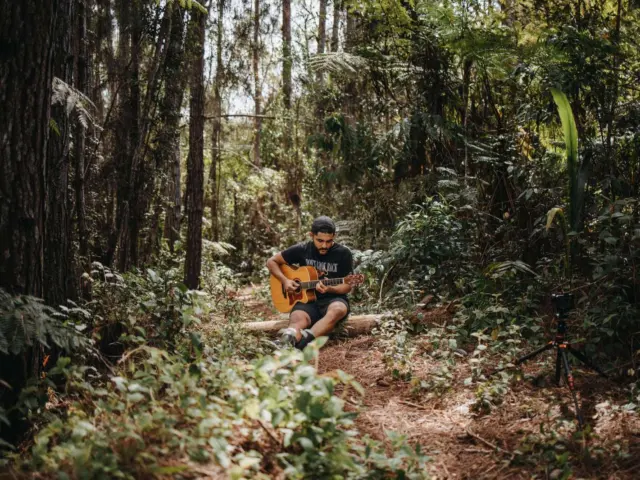
Its core sound is simple: it hybridizes the acoustic guitar melodies of traditional folk music with contemporary instrumentation. For a fuller primer, see our guide on what is indie folk.
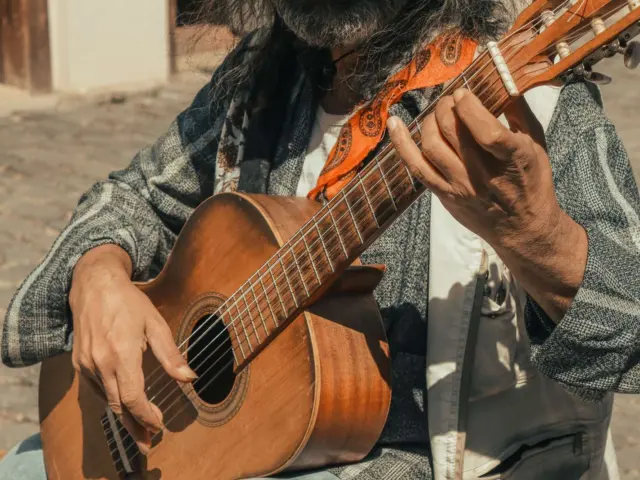
Instruments frequently used in the genre include guitars, banjos, mandolins and ukuleles. That is a more homespun, acoustic palette than the electric lineup that defined folk rock.
The roots are later than folk rock’s. The genre has its earliest origins in 1990s folk artists with alternative rock influences, such as Ani DiFranco and Dan Bern, plus acoustic artists such as Elliott Smith and Will Oldham.
The older music still echoes. John Lennon and Bob Dylan have been cited as influences for indie folk, so the two genres share ancestors even though they sound different.
Indie folk vs folk rock: the key differences
- Era: folk rock is a mid-1960s product; indie folk grew from 1990s folk artists with alternative rock influences.
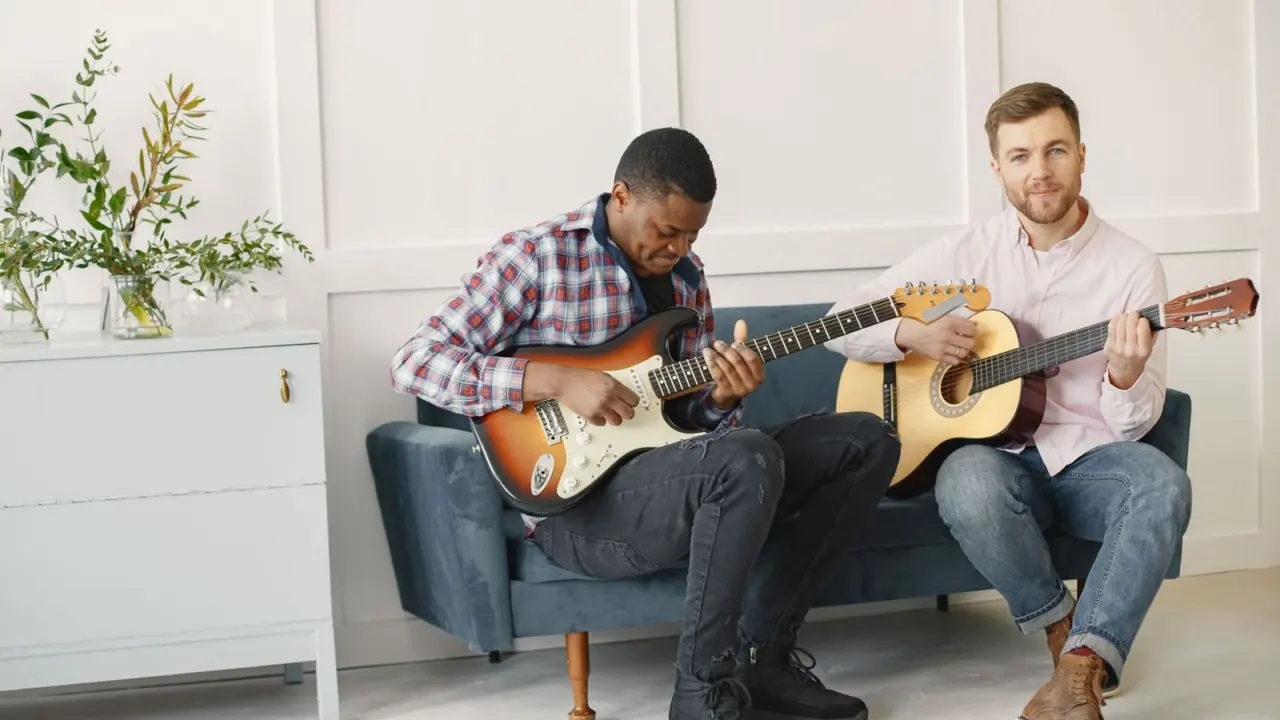
- Instruments: folk rock leans on a full electric band; indie folk starts from acoustic guitar, banjo or mandolin and adds contemporary touches.
- Scene: folk rock rose with the pop charts and the British Invasion; indie folk grew through independent labels.
- Attitude: folk rock was often about the folk-to-rock crossover itself; indie folk is a looser, DIY-flavoured mix.
Labels, scenes and where the lines blur
Indie folk found support through labels such as Saddle Creek, Barsuk, Ramseur and Sub Pop in the decade after its 1990s beginnings. That independent infrastructure is a big part of why the genre carries the “indie” tag.
Folk rock kept changing too. As the 1970s dawned, it evolved away from the jangly Byrds template. Electric folk was pioneered by Fairport Convention from 1969.
In Britain and Europe, a distinct, eclectic British folk rock style was created by Pentangle, Fairport Convention and Alan Stivell during the late 1960s. It shows that folk rock was never one single sound.
The same is true of indie folk. Because “indie” describes how and where music is released as much as how it sounds, two indie folk records can feel very different from each other, from hushed bedroom recordings to lush, layered arrangements.
Overlap is real. A band with acoustic guitars, a drummer and harmonies can be filed either way, so treat the labels as guides, not walls.
How to tell them apart by ear
- Listen for the lead instrument. Chiming electric guitar and a steady backbeat point to folk rock.
- Check the instruments. Banjo, mandolin or ukulele layered over acoustic guitar leans indie folk.
To see how the newer genre grew, read the history of indie folk. For the wider picture, start with indie folk music, which is the hub for this topic.
Frequently asked questions
Is indie folk the same as folk rock?
Show answer
No. Folk rock is a mid-1960s blend of folk songs and rock band instrumentation. Indie folk is acoustic-first and traces back to 1990s indie-influenced folk artists.
Who started folk rock?
Show answer
According to Wikipedia, the genre was pioneered by the Byrds, with Dylan’s electric Newport set on 25 July 1965 as another pivotal moment.
Can a band be both?
Show answer
Yes. The categories overlap, and a band with acoustic songwriting and a full rock lineup can reasonably be placed under either label.
Did Bob Dylan influence both genres?
Show answer
Yes. Dylan’s songs and electric recordings helped create folk rock, and he has also been cited as an influence on indie folk.