Wondering what makes a song sound like indie folk? The core indie folk instruments are acoustic guitar, banjo, mandolin, piano and double bass, often with drums and electric colour layered on top.
| Item | Value |
|---|---|
| Instruments Mumford & Sons members play | Acoustic guitar, drums, keyboards, bass guitar, banjo, mandolin, resonator guitar |
| Early core instruments of the band | Acoustic guitar, banjo, piano, double bass |
| Debut album Sigh No More | 2009 |
| Third album Wilder Mind | Released 4 May 2015 |
| Wilder Mind chart start | Number one in the UK, the US and Australia |
Figures come from Wikipedia’s Mumford & Sons entry. Details can change, so check the source before you rely on them.
This guide is part of our wider look at indie folk music. It walks through the instruments you hear most, why they sit together so well, and how bands bend the formula.
The acoustic core of the sound
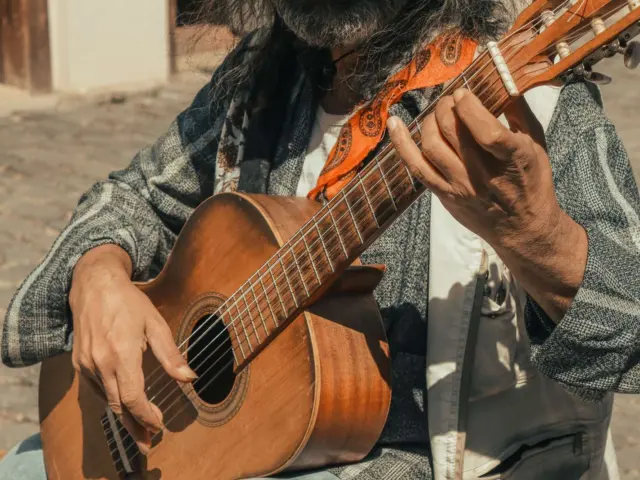
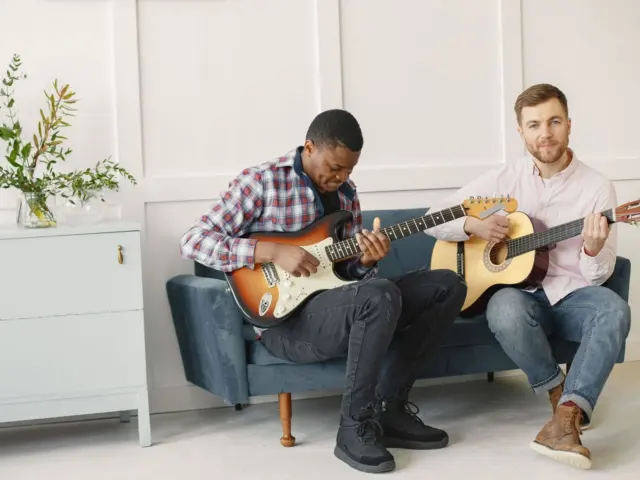
The acoustic guitar was one of Mumford & Sons’ early core instruments. It carries the chords, sets the rhythm and leaves plenty of space for a voice. Fingerpicking gives a hushed, intimate feel, while hard strumming gives the stomping, singalong energy of the genre’s louder end.
Around that guitar, bands add instruments with a rootsy, wooden character. You can hear the same small set again and again:
- Banjo, for bright, rolling picked patterns.
- Mandolin, for a shimmering, plucked top line.
- Double bass, for a warm, rounded low end.
- Piano, for chords and sustained, emotional movement.
- Fiddle or strings, for melody and swell.
Mumford & Sons are a clear example. Per Wikipedia, band members play acoustic guitar, drums, keyboard instruments, bass guitar, and traditional folk instruments such as banjo, mandolin and resonator guitar.
Why the banjo became a symbol
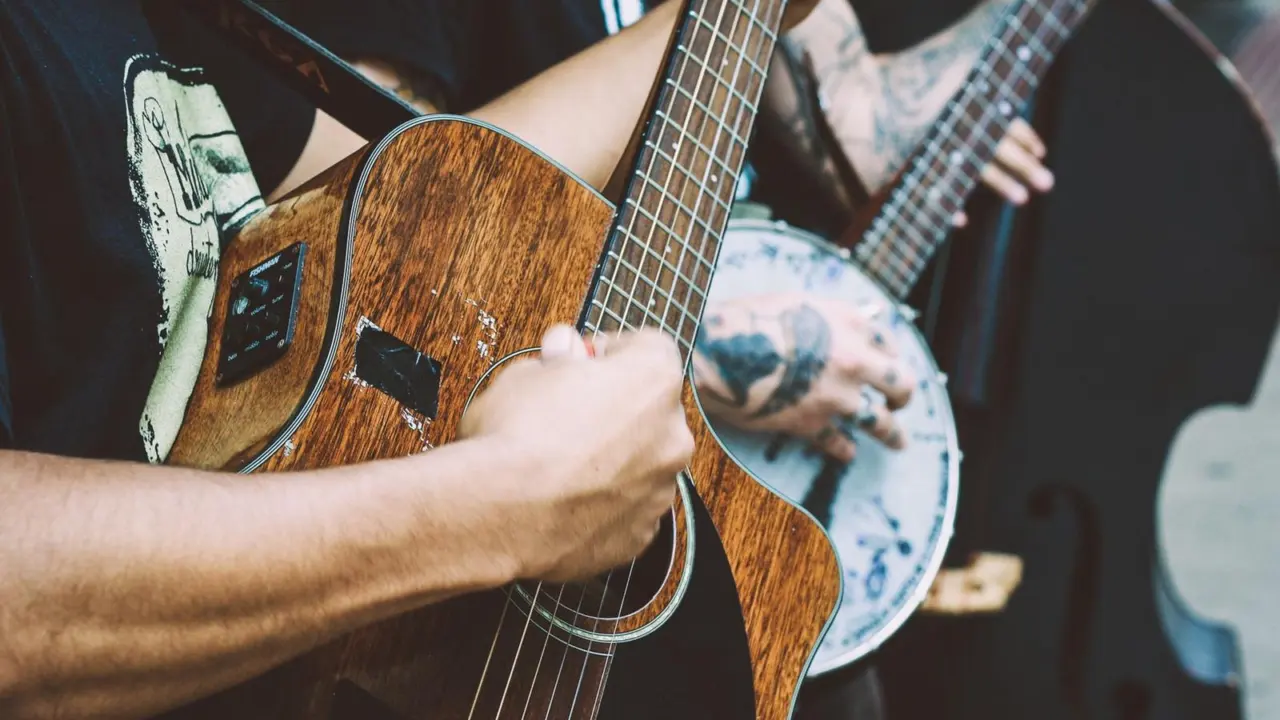
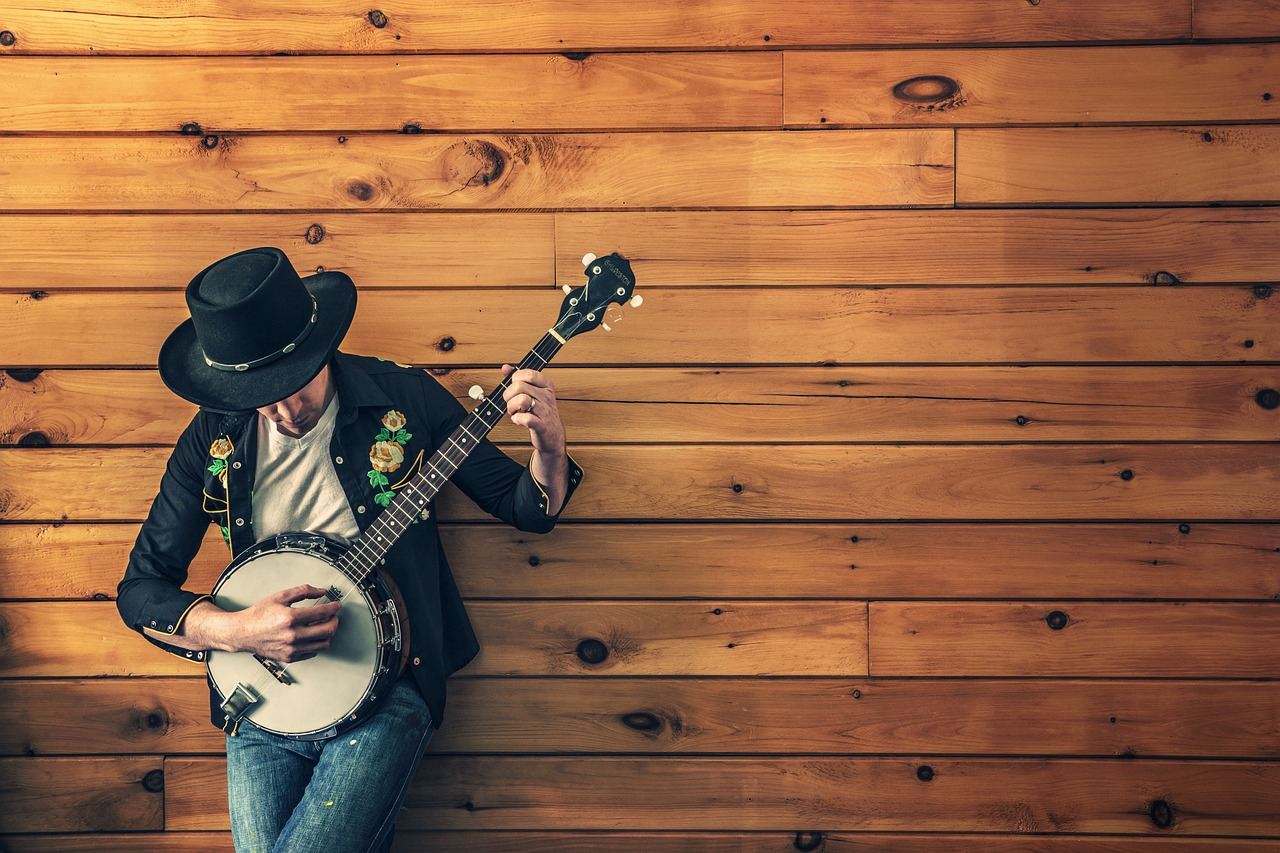
The banjo is probably the instrument people most associate with the revival of folk-flavoured pop around the time of Mumford & Sons’ debut. Its sharp attack cuts through a crowd of strummed guitars, which is why it works so well in anthemic choruses.
The same band shows how strongly it was tied to an identity. Wikipedia notes that the banjo had become synonymous with the band, and that the early line-up used the core instruments of acoustic guitar, banjo, piano and a double bass. The press noticed too: London’s Evening Standard once described their sound as “broadly speaking, Coldplay with a banjo”, according to uDiscover Music.
Players are often drawn to it from older roots music. Marcus Mumford has said Old Crow Medicine Show inspired the band to pick up the banjo, as the same Wikipedia entry records.
Mandolin, resonator guitar and other folk colours
Beyond the banjo, smaller touches define a track’s mood. A mandolin adds a quick, sparkling pulse that thickens a chorus without crowding the vocal. A resonator guitar, which has a metal cone inside the body, gives a ringing, slightly gritty tone often linked to blues and country.
Percussion in the genre tends to stay simple. Think a kick drum and a tambourine, or hands and feet stamping on a wooden floor, rather than a full rock kit. That keeps the energy up while the acoustic instruments stay in front.
When you listen, try picking out the layers one at a time:
- Find the guitar that holds the chords.
- Listen for the plucked instrument on top, banjo or mandolin.
- Follow the bass line underneath.
- Notice where voices stack into harmony.
When indie folk plugs in
The genre has never been strictly acoustic. Wikipedia says that at the end of the Babel tour, Winston Marshall traded his banjo for electric guitar in sound checks, and Marcus Mumford played more drums as the band jammed on heavy instrumentals.
That shift showed up on record. Wilder Mind, released on 4 May 2015, debuted at number one in the UK, the US and Australia, and Wikipedia notes the banjo does not feature on that record. The Billboard headline for it was “Bye, Banjos”.
The lesson is that indie folk is defined by songwriting and texture more than a fixed shopping list. Electric guitars, synths and drum kits can sit beside folk instruments and the music still reads as part of the family. For how those lines blur, see our guide to indie folk subgenres.
How to hear the instruments on a record
Recordings reward careful listening. A banjo often sits in the middle of the mix and plays repeating patterns, so it can feel like an extra rhythm section within the band. A mandolin tends to echo a melody or add short chopped chords on the off-beats.
Piano and double bass work as the foundation. The piano fills out the harmony, and the bass anchors each change of chord so the plucked instruments above can stay light.
Voices count as an instrument in this style too. Stacked harmonies and group choruses are as much a part of the palette as any string, and they are often what lets a small acoustic line-up sound large in a live room.
Questions worth asking while you listen
- Is the lead plucked instrument bright and ringing, or soft and round?
- Does the drumming drive the song, or does it simply keep time?
- Do the voices sing in unison or split into parts?
- Does the arrangement stay acoustic from start to finish, or does it plug in?
Asking these questions makes it easier to compare bands, and it trains your ear to notice arrangement choices you would otherwise miss. Try it on a favourite album and then on a record you have never heard. Acts can share a banjo and still sound very different when some stay hushed and others lean on stomping percussion.
How the palette connects to the genre’s past
Many of these instruments came from older traditions long before indie folk had a name. Bands picked them up because they sound human, handmade and unpolished, a deliberate contrast with glossy studio pop.
That link to older music is explored in our history of indie folk. It helps explain why a banjo in a 2009 song can feel both new and very old at the same time.
If you want to start playing, you do not need every instrument. A good acoustic guitar and a willingness to layer one more plucked instrument, even a borrowed mandolin, gets you most of the way to the sound.
Frequently asked questions
What instruments are most common in indie folk?
Show answer
Acoustic guitar comes first, followed by banjo, mandolin, piano, double bass and strings. Many bands add simple drums and, increasingly, electric guitar.
Do indie folk bands always use a banjo?
Show answer
No. Mumford & Sons became known for it, yet Wikipedia notes the banjo does not feature on their 2015 album Wilder Mind. Plenty of indie folk songs rely on guitar and piano alone.
What is a resonator guitar?
Show answer
It is a guitar with a metal resonating cone in the body that makes it louder and gives it a ringing tone. It is one of the folk instruments Mumford & Sons members play.
Which instrument should a beginner learn first?
Show answer
Acoustic guitar is the usual starting point because it underpins most songs in the genre. Banjo or mandolin can follow once you are comfortable with chords.