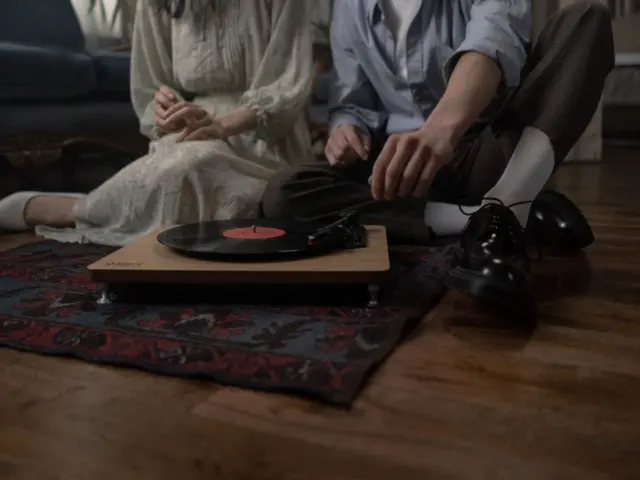
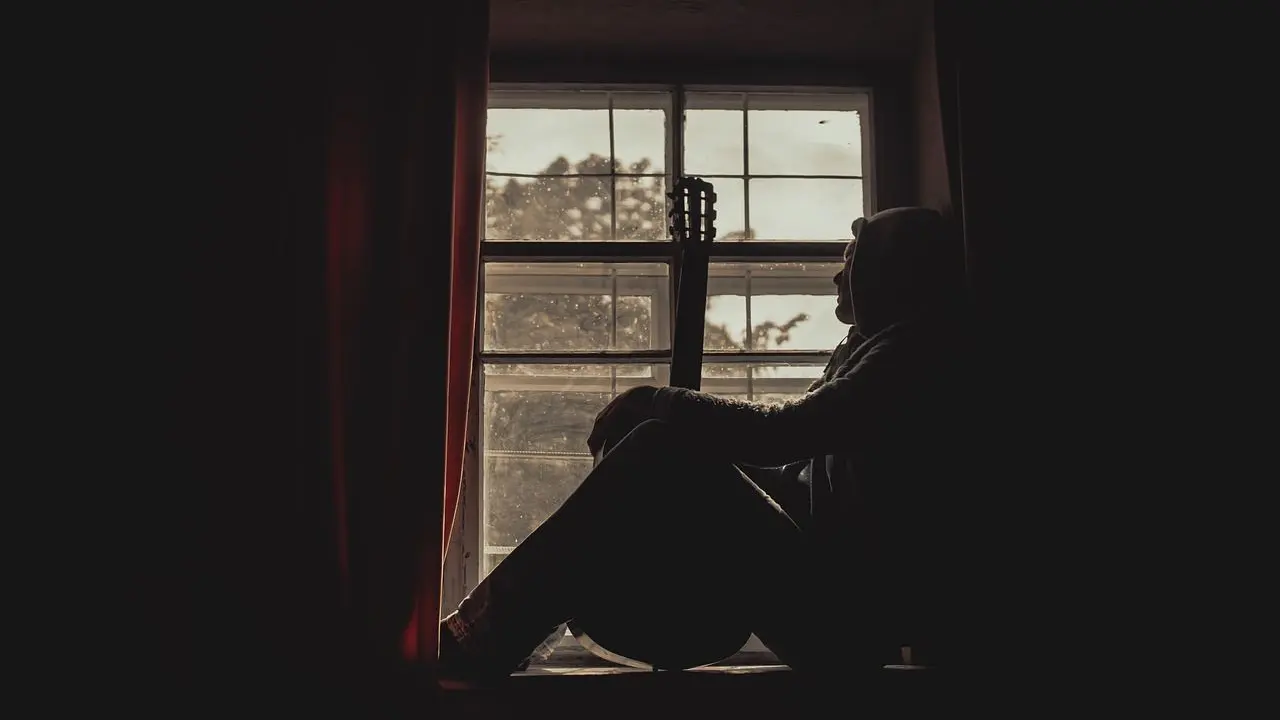
Some evenings need music that sits with you instead of cheering you up. Sad indie folk songs do that: hushed voices, plain guitars and honest words, best heard slowly and alone.
New to the genre? Start with our guide on how to get into indie folk.
| Item | Value |
|---|---|
| Bon Iver, For Emma, Forever Ago: self-release | July 2007 |
| Bon Iver, For Emma, Forever Ago: wide release on Jagjaguwar | February 2008 |
| Recording period at the cabin | Late 2006 to early 2007 |
| Cabin location | An hour northwest of Eau Claire, Wisconsin |
| Year Sufjan Stevens’ mother, Carrie, died | 2012 |
Dates and details come from Wikipedia’s page on For Emma, Forever Ago and American Songwriter’s piece on “Fourth of July”. Figures can change as sources are corrected, so check the source before you rely on them.
What makes a folk song sad in the first place?
Sadness in this genre rarely comes from big drama. It comes from restraint: a voice kept close to the microphone, a guitar that barely moves, and a lyric that names one small thing exactly.
Listen for these ingredients when you build an evening around the mood:
- Quiet, close-miked vocals, often doubled or layered into a soft haze.
- Fingerpicked acoustic guitar or a lone piano instead of full-band drums.
- Lyrics about a specific loss: a person, a place, a season, a house.
- Space between the notes, so silence does part of the work.
None of this is a formula. Plenty of songs use all four and still feel empty, which is why the listening matters more than the checklist.
Two records that define the mood
If you want a starting point, two albums show how grief and isolation can become beautiful music. Both come from real, documented circumstances, which is part of why they land so hard.
Bon Iver and a winter in a cabin
Justin Vernon retreated to a hunting cabin his father owned. According to Wikipedia, he drove to the cabin an hour northwest of his hometown, Eau Claire, Wisconsin, hoping to be alone.
The same page says the album was recorded there between late 2006 and early 2007. It was first self-released in July 2007, then reached a wider audience on the Jagjaguwar label in February 2008.
The result is a falsetto-heavy, wintry record that suits a dark evening with a hot drink.
Sufjan Stevens and “Fourth of July”
Sufjan Stevens’ album Carrie & Lowell is about his mother, and American Songwriter notes that his mother, Carrie, died in 2012. The same article calls “Fourth of July” a tender song about his mother’s death.
It is built on a hushed conversation, a few soft instruments and very little else. If you only play one song from this list on a quiet night, make it this one, and give it your full attention.

How to build a quiet-evening playlist
A good sad playlist has a shape. Think of it as a slow walk rather than a list of saddest hits.
- Open gently. Start with a warm, mid-tempo song so the mood arrives without a jolt.
- Go deeper in the middle. Place your most stripped-back tracks here, where you are most settled.
- Add one lift. A song with a little light in it stops the set from sinking.
- End on something kind. Close with a song that feels like an exhale, not a cliff.
Keep the volume low and the lights lower.
If you are still deciding what belongs on the list, our roundup of the best indie folk songs is a good place to pull from. Mix a few brighter picks in with the heavy ones.
Setting the scene for a slow listen
The room matters nearly as much as the songs. A few small choices can turn background noise into an actual listening session.
- Put your phone face down, or on silent, so nothing interrupts a verse.
- Use headphones if your home is noisy; breath and finger squeaks are part of the sound.
- Play whole albums when you can, because these records are sequenced to be heard in order.
- Read the lyrics once, then listen again without them.
Try one album per evening instead of skipping between artists. The slower pace lets a record’s small recurring ideas surface, such as a returning guitar figure or a phrase that changes meaning the second time around.
Lighting and drink help too, though nobody needs rules for that. A lamp, a blanket and something warm are plenty.
Finding more songs once you have the mood
Once the two records above have worked on you, the next step is to follow the threads. Look at who the artist thanks in the liner notes, which labels release similar work, and which songwriters they name as influences.
Here are a few ways to keep exploring without a recommendation engine:
- Read the credits of a favourite album and look up the producers and guest musicians.
- Follow a label’s catalogue; small labels usually have a recognisable taste.
- Watch live session recordings, where the same songs often sound even barer.
- Ask friends what they play late at night, and trade albums rather than links.
You will soon notice that the saddest songs are seldom the loudest or the most dramatic. They are the ones where the singer sounds like they are talking to one person in the next room.
Sad music when you are actually sad
There is a difference between enjoying melancholy and being stuck in it. Music can keep you company, but it is not a treatment for low mood or grief.
A few habits keep the listening healthy:
- Choose songs that match your mood, then move gradually to gentler ones.
- Stop if a track leaves you feeling worse rather than lighter.
- Talk to someone you trust, or a health professional, if low mood lasts or worries you.
Many people find that a song which names a feeling makes it easier to carry. That is the quiet promise of the genre, and it works best when you stay in charge of the volume button.
When you want calm more than heartache
Not every soft acoustic song needs to hurt. If you want something to sit behind a task rather than pull at you, the lyrics-light end of the genre works better.
Our page on indie folk songs for studying covers that side. Save the emotionally heavy albums for evenings when you have nothing else to do.
Frequently asked questions
What counts as a sad indie folk song?
Show answer
Usually a slow, acoustic song with a close, quiet vocal and lyrics about loss, distance or regret. The mood matters more than any strict genre label.
Which album should I start with?
Show answer
Bon Iver’s For Emma, Forever Ago is a common entry point, recorded at a cabin in Wisconsin between late 2006 and early 2007. Sufjan Stevens’ Carrie & Lowell is another, written around the loss of his mother.
Is it healthy to listen to sad music when I feel low?
Show answer
For many people it is comforting, but it varies. If a song leaves you feeling worse, switch to something gentler, and seek professional help if your low mood persists.
How loud should I play these songs?
Show answer
Low. The recordings are intimate, and the small details in the voice and guitar are easier to hear at a gentle volume in a quiet room.